Tilt down — you know it
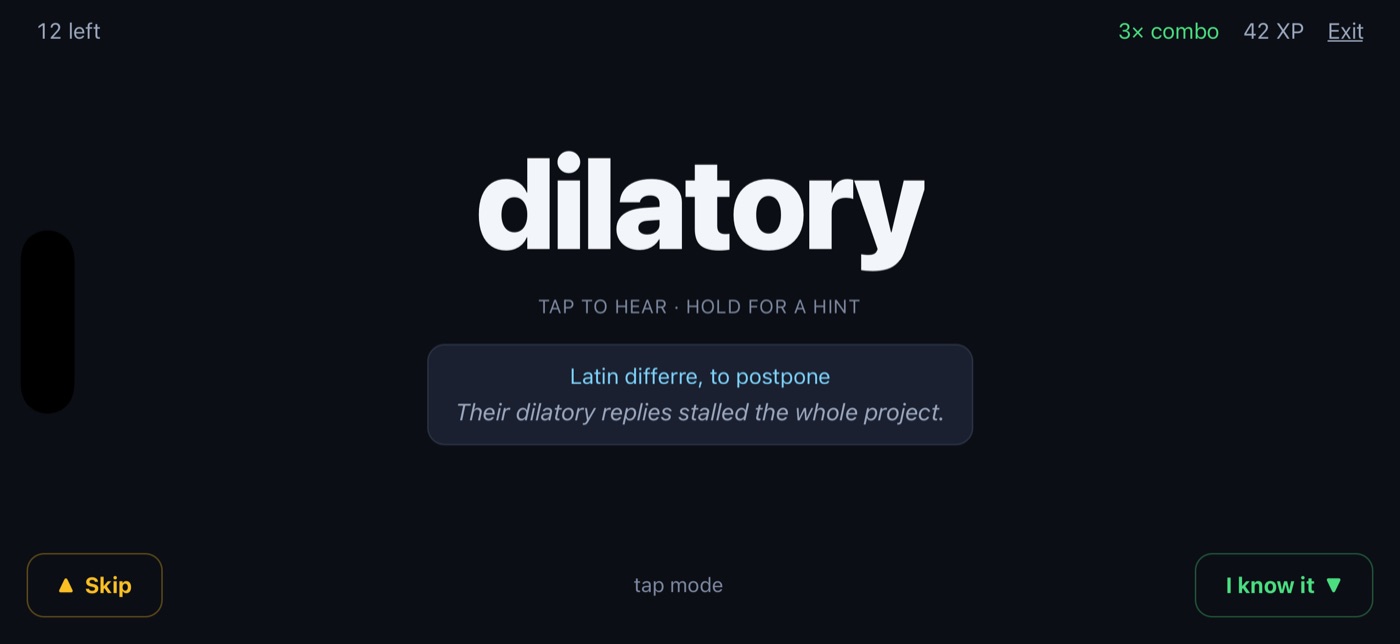
One word fills the screen. Flip the phone forward and it's gone, with a haptic tap so you feel the answer land without looking.
 VocabKuizu
VocabKuizu is a vocabulary game you play with your hands. Hold the phone up, read the word, and tilt it down when you know it — or up to skip and see what it means.
In beta on iOS. Android on the way.
Try it — swipe the card, or tap a button.
Built for the way vocabulary actually sticks
A round is fifteen words and about a minute. It feels like a game because your whole body is in it, not just your thumb.
One word fills the screen. Flip the phone forward and it's gone, with a haptic tap so you feel the answer land without looking.
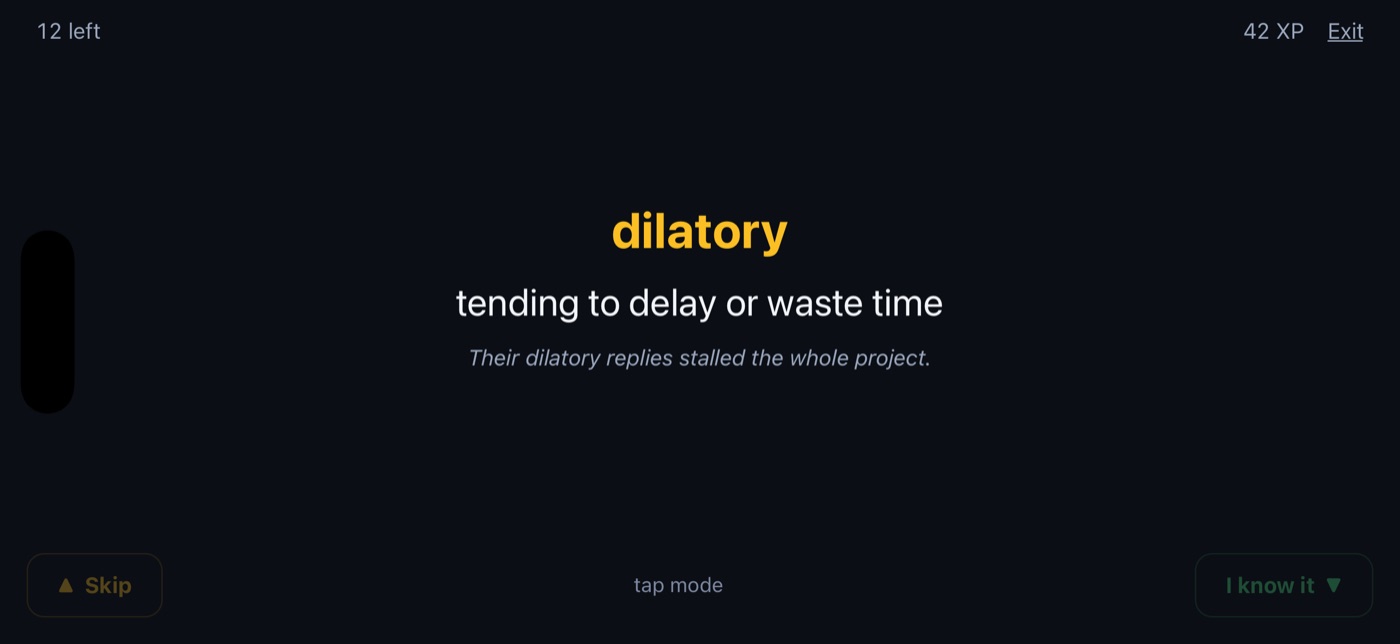
Skipping isn't failing. The definition appears for a beat, and the word comes back later in the round while the answer is still fresh.
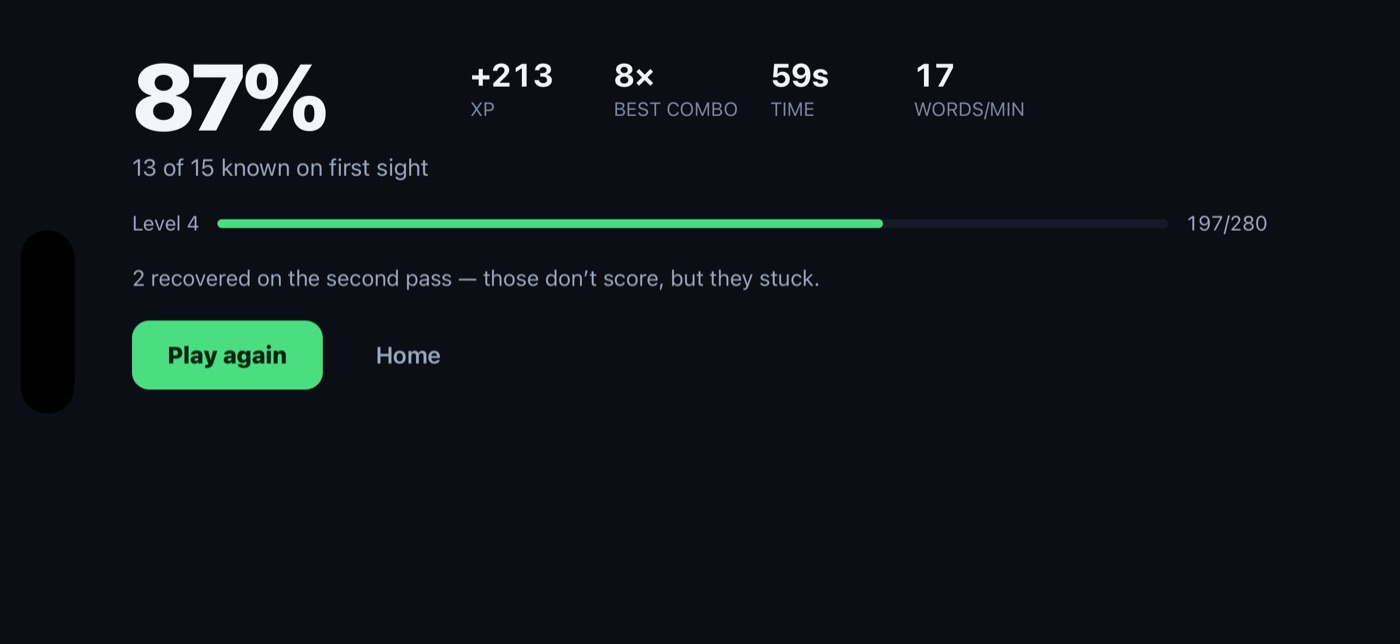
At the end you get the words that never landed, with their definitions — the most useful thing on the screen, and the reason this is study and not trivia.
Typing fifty words on a phone keyboard is a hundred text fields, and nobody does that twice. So don't.
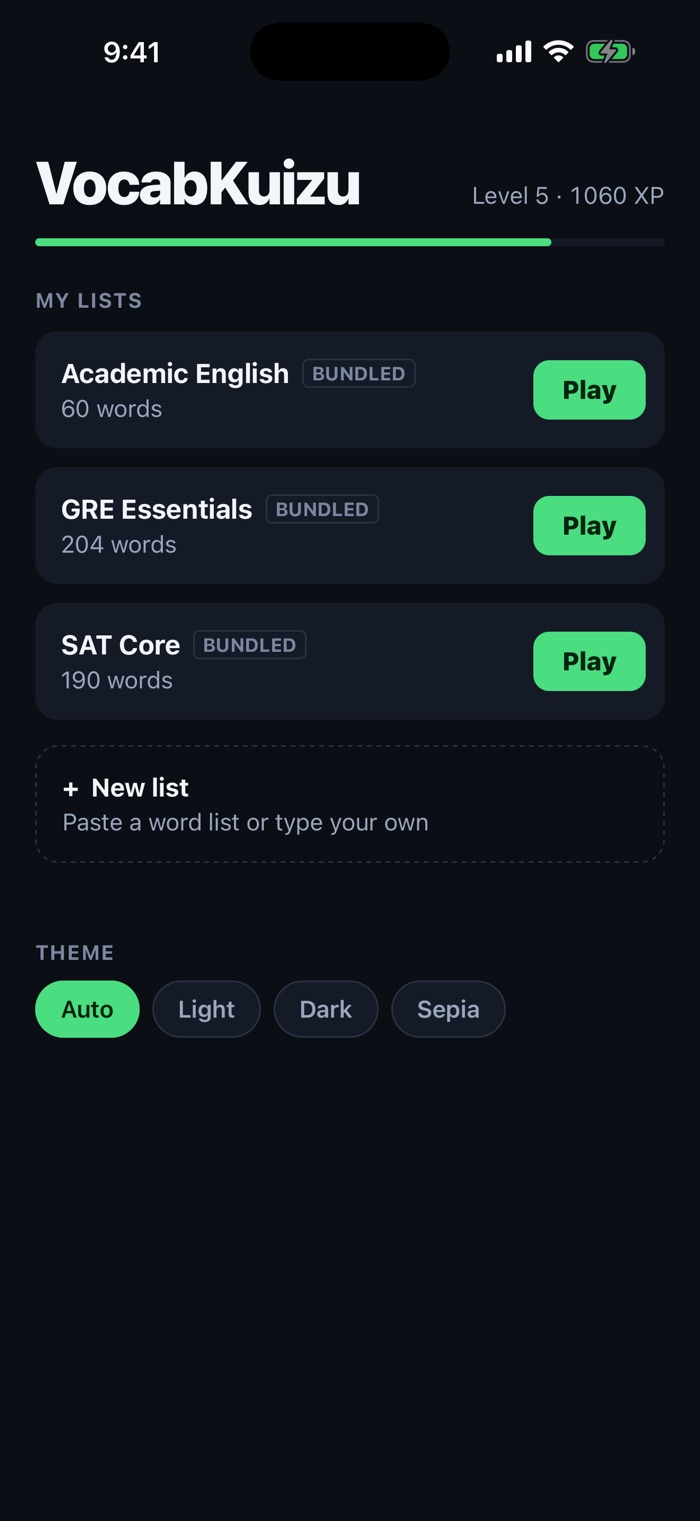
Every word carries its root and origin, which you reach by tilting the phone sideways. Or paste your own list and play that instead.
190 words
204 words
60 words · TOEFL & IELTS
Paste and play
Real screens, landscape, exactly as the game is played.


Most flashcard apps take your word for it. That's how you end up feeling ready and then blanking on the day.
Admitting you don't know a word is reliable evidence, so it drives when you see that word again. Saying you knew it isn't, so it doesn't stretch your review schedule.
Get a word on the second pass and it's reported separately, not folded into your percentage. The honest figure is the one measured before you saw the answer.
VocabKuizu is in TestFlight on iOS while the tilt controls get tuned against real hands. If you'd like a build — or you teach a class that could use it — get in touch.
Ask for a beta inviteOr email support@spaikz.com